Artificial Intelligence Engineer
Artificial Intelligence Engineer
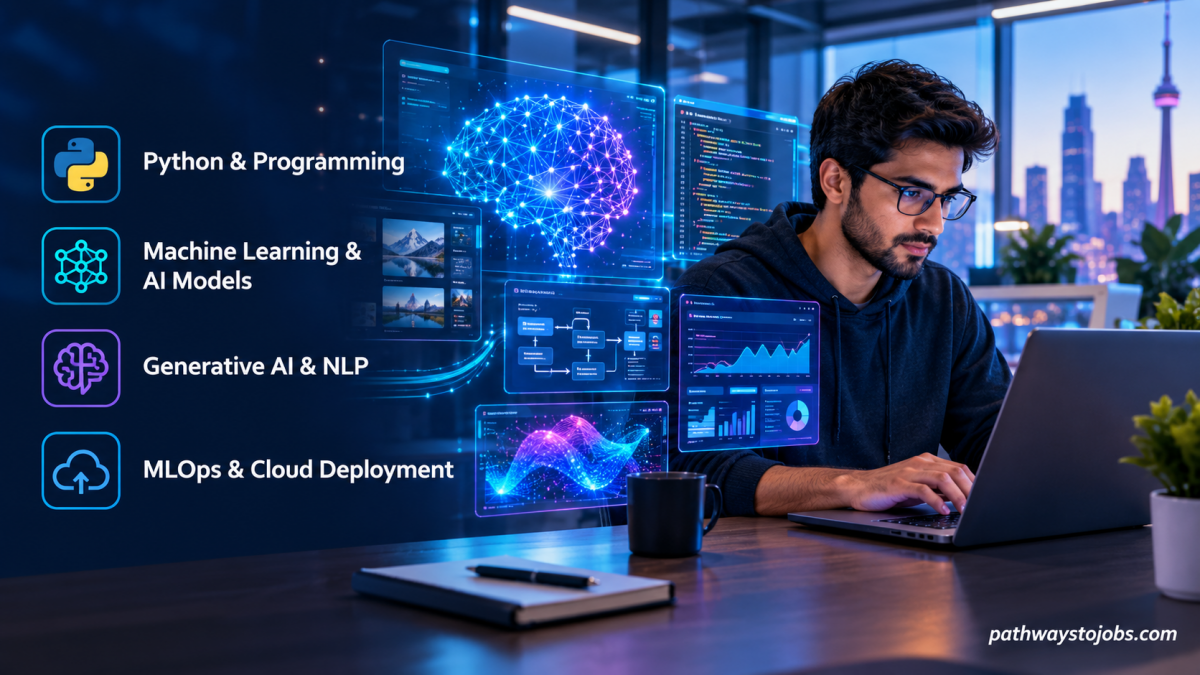
Career Overview
Emerging career: Artificial intelligence engineers write computer programs and build smart systems that learn from data to solve real-world problems. Instead of designing buildings or machines, they create AI software that can recognize patterns, make predictions, and help people make better decisions. They also test and improve these systems to make sure they are accurate, safe, and used responsibly.
Education
A bachelor's degree in computer science, software engineering, computer engineering, mathematics, or a related field is usually required. Many AI engineers also complete a master's degree or specialized training in artificial intelligence or machine learning. Strong programming, math, and data analysis skills are important.
Work Environment
AI engineers usually work in modern offices or remotely, using powerful computers and specialized software. They spend much of their time designing, testing, and improving AI systems while working with software developers, data scientists, and other tech professionals. Some may also visit clients or research facilities, depending on the project.
Future Outlook
Strong - The future for AI engineers is expected to remain strong as more businesses, schools, hospitals, and governments use artificial intelligence. As AI technology continues to grow, skilled professionals will be needed to design, improve, and manage AI systems while ensuring they are safe, secure, and used responsibly.
Recommended High School Courses
- Computer Science
- Physics
- English
- Statistics
- Advanced Mathematics
- Data Management
- Communicatiion - Sharing ideas clearly and understanding what others need from an AI system.
- Data Analysis - Examining data to find patterns, understand information, and support better decisions.
- Problem Solving - Using logical and creative thinking to find solutions to challenges.
- Programming - Writing computer programs for various purposes.
- Testing - Trying different approaches to see what works best and identifying what needs improvement.
- Artificial Intelligence - Understanding how computers and machines can perform tasks that normally require human intelligence.
- Computer Systems - Understanding how computer hardware, software, and networks work together to run AI tools.
- Cyber Security and Privacy - Understanding how to protect information, computer systems, and personal data when using AI and technology.
- Machine Learning - Understanding how computers learn from data to identify patterns, make predictions, and improve their performance.
- Mathematics - Knowledge of arithmetic, algebra, geometry, calculus, statistics, and their applications.
- Active learning - Understanding the implications of new information for both current and future problem-solving and decision-making.See more occupations related to this skill.
- Complex Problem Solving - Identifying complex problems and reviewing related information to develop and evaluate options and implement solutions.
- Think creatively - Come up with new ideas and different ways to use AI to solve problems.
- Write and test code
- Build and train AI models
- Analyze data
- Improve model accuracy
- Troubleshoot AI systems
- Test for safety and bias
- Document results
- Work with developers and data teams
- Update AI systems
- Research new AI tools and methods
Schools